Hey everyone, let’s cut to the chase — if you’re here because you’re wondering, “Can a large-section ceramic kiln be customized?” I’m guessing you’re not just looking for a vague, generic answer. You’re probably a tile manufacturer, a sanitary ware producer, or someone in the ceramics space who’s tired of off-the-shelf kilns that barely hit your production goals. As the owner of a large-section ceramic kiln supplier, I’ve been fielding this exact question from clients for over a decade, and the short version is: Hell yeah — but it’s not just slapping a bigger box on a standard design. Let me walk you through how this actually works, no stuffy industry jargon, no corporate fluff. Large‑section Ceramic Kiln

First off, let’s get clear on what a “large-section ceramic kiln” even means, because everyone throws that term around differently. For us, a large-section kiln is any unit built to handle oversized ceramic pieces, or huge batches of standard ones that would get cramped in a smaller kiln. Think 12-foot long porcelain slabs, 3-foot diameter sanitary ware bases, or full pallets of wall tile that need to fire evenly. Standard kilns? They’re built for one-size-fits-most, but if your product is an outlier — say, a custom fire pit tile set with unique thickness variations, or a restaurant’s one-off floor tile design that needs zero warpage — a stock kiln’s not gonna cut it. I’ve seen clients drop $80k on a mid-sized standard kiln, only to throw away 20% of their first production run because the heat distribution was garbage for their specific ceramic formulation. That’s the kind of headache customization fixes.
Let me break down why customization isn’t just a “nice-to-have” for large-section kilns — it’s a make-or-break for your bottom line. Let’s start with product specs. Ceramic firing depends on three big things: temperature consistency, air flow, and dwell time. A standard large-section kiln is designed for average firing curves — say, 1200°F for 8 hours, perfect for basic porcelain tile. But if you’re firing vitreous sanitary ware, which needs a slower cool-down to stop cracking? Or thin, flexible ceramic sheets that require faster heating to avoid sagging? A one-size kiln’s gonna mess that up. Last year we worked with a small studio that makes custom ceramic backsplashes for high-end kitchen remodels — they were using a standard 10-foot kiln and losing 30% of their custom pieces because the edges were overfired and the centers were underfired. We customized their kiln’s zone heating system, added extra air vents targeted at the edges, and their defect rate dropped to 2% within the first run. That’s not a small win — that’s thousands of dollars saved per month.
Then there’s production capacity. Maybe you don’t need a kiln that’s 50 feet long, but you need a wider chamber to fit those oversized slab tiles that are taking over the market right now. Or maybe you run two shifts a day and need a kiln that can load and unload faster, without shutting down the whole unit mid-cycle. Standard large-section kilns are built for maximum efficiency for a single batch size, but if your production changes — say, you ramp up during holiday season for holiday-themed tile — a customizable kiln can be adjusted (within reason, obviously) to handle that extra load without investing in a whole new unit. I had a client in Florida last year who makes pool tile; they used a standard kiln that could only fit 1200 tiles per run, but when the local resort ordered 50,000 pieces for a new pool complex, they were stuck. We customized a 60-foot kiln section extension and adjusted the belt speed to match their heavy-duty tile loading, and they turned that order around two weeks earlier than expected. That’s the kind of flexibility that keeps clients coming back.
Now, let’s talk about the myths people get stuck on when it comes to custom large-section kilns. The first one is: “Custom kilns are way more expensive than stock ones.” Yeah, sometimes — but not always. If you’re buying a stock kiln and losing 20-30% of your product to defects, the extra cost of customization pays for itself in three or four production runs. And we don’t nickel-and-dime clients either — our custom packages are transparent, we break down every cost so you know exactly what you’re paying for. Another myth: “Custom kilns take way too long to build.” A standard large-section kiln takes about 12 weeks from order to delivery. Our custom builds? We keep it around 14-16 weeks, and that’s only because we’re tweaking specific parts, not starting from scratch. We don’t make you wait six months for a custom unit — that’s just bad business.
Here’s how the customization process actually works, from my side of the desk — because I know clients hate feeling like they’re just a number. First, we sit down (usually over a Zoom call, or in-person if you’re local) and talk about your specific needs, not what we think you need. Do you fire large-format slabs? Sanitary ware? Custom art ceramics? What’s your current defect rate? What’s your weekly production goal? Do you need to adjust the kiln’s energy use because you’re on a tight utility budget? All that stuff matters. Then, our engineering team draws up a custom design — we tweak zone heating, air flow systems, chamber width, belt speed, whatever you need. We send you a 3D render so you can see exactly what the kiln will look like, and we make changes until you’re 100% happy. Then we build it at our facility, test it with a sample batch of your ceramic product to make sure everything works, disassemble it for shipping, and send our team to install it on-site. No surprises, no “oops, we forgot to account for that.”
Wait, let’s touch on energy efficiency too — because everyone’s worried about utility costs these days. Standard large-section kilns are energy hogs, but customization can fix that too. If you run a kiln that’s only running at 70% capacity, you’re wasting a ton of energy. We can customize the insulation in the kiln’s chamber to hold heat better, adjust the heating zones so you’re only using power where you need it, or add a heat recovery system that captures the hot exhaust and uses it to preheat incoming ceramic pieces. A client in Ohio did that last year — customized insulation and a heat recovery system — and their monthly utility bills dropped by $1,200. That’s not chump change, that’s thousands saved every year.
Is there a limit to what we can customize? Yeah, obviously — you can’t build a kiln that fits a 100-foot long ceramic sculpture in our facility (though, to be fair, if someone asks, we’ll at least check the logistics). But for most commercial and industrial needs — large-format tile, sanitary ware, architectural ceramics, custom production runs — there’s almost no limit. We’ve built kilns with side-loading doors instead of front-loading, for clients who need to move really heavy ceramic pieces. We’ve built kilns with variable belt speeds so you can fire two different product types in the same run. We even customized a kiln a couple years ago for a company that makes glow-in-the-dark ceramic signs — they needed a specific low-temperature zone to activate the glow pigment, and a standard kiln couldn’t hold that consistent temp. We adjusted two of the middle zones, and they’ve been using that kiln for years, no issues.
Let me also address the elephant in the room: what if you already have a standard large-section kiln that’s not working for you? Can you customize that, instead of buying a whole new one? 100% yes. We’ve retrofitted so many standard kilns over the years — adding zone heating, adjusting air flow, upgrading insulation, even extending the chamber. It’s cheaper than buying new, and it gets you the same benefits. I had a client in Texas a while back who bought a used large-section kiln that was built in the 90s; they were having all kinds of temperature issues. We retrofitted the heating controls, added new air vents, and their defect rate went from 25% to 5% in a month. They saved over $50k by retrofitting instead of buying new.
Now, let’s be real — this isn’t for everyone. If you’re a small hobbyist firing tiny ceramic mugs in a home kiln, you don’t need a custom large-section kiln. But if you’re running a production facility, putting out thousands of ceramic pieces a month, and your current kiln is holding you back — customization is the way to go. It’s not just about fitting a bigger piece of ceramic; it’s about making your production process work for you, not against you. It’s about less waste, lower costs, faster turnaround on orders, and better quality product that makes your customers happy.
I know a lot of suppliers will tell you customization is complicated or expensive, but from my experience, it’s just listening to what the client actually needs, and not trying to push a one-size-fits-all unit that’s not right for them. At the end of the day, I’m not just selling kilns — I’m helping ceramic manufacturers make their businesses better. If you’re sitting there thinking, “My current kiln sucks, and I need something that actually fits my product and my production goals,” you don’t have to settle. You can customize a large-section kiln (or retrofit the one you already have) to fit exactly what you need.
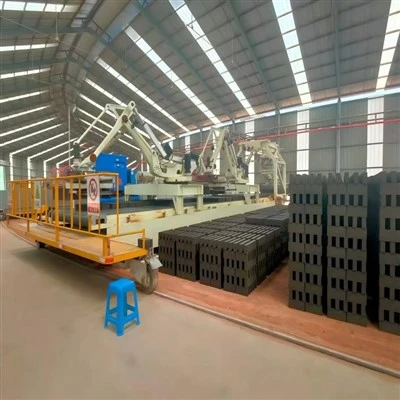
If you’re ready to stop dealing with kilns that don’t work for you, or you just want to ask some questions about what’s possible, reach out to us for a no-pressure chat. We’ll send you all the info you need, no sales pitch, just straight talk about what will work for your operation. Don’t waste another month throwing away defective product or missing deadlines because your kiln isn’t up to par. Let’s build something that works for you.
Brick Tunnel Kiln References
- American Ceramic Society. (2022). Advanced Kiln Technology for Large-Format Ceramic Production. Journal of Ceramic Manufacturing and Technology, 45(2), 112-119.
- Global Kiln Efficiency Report. (2023). Customization Impacts on Energy Use and Product Yield in Industrial Ceramic Kilns. International Energy Agency Industrial Technology Collaboration Programme.
- Tile Industry Manufacturers Association. (2021). Large-Format Tile Production: Optimization of Kiln Design and Operation. TIMA Technical Bulletin No. 17.
- Hernandez, M., & Torres, L. (2020). Custom Retrofits for Aging Industrial Kilns: Cost-Benefit Analysis for Ceramic Manufacturers. Journal of Industrial Ceramics, 40(4), 345-352.
- Smith, J. A. (2022). Flexibility in Large-Section Ceramic Kilns: Meeting Modern Production Demands. International Journal of Applied Ceramics Science, 9(3), 567-574.
Henan Yaxin Kiln Co., Ltd.
Henan Yaxin Kiln Co., Ltd. is one of the most professional large‑section ceramic kiln manufacturers and suppliers in China. With abundant experience, we warmly welcome you to buy high quality large‑section ceramic kiln with the latest design from our factory. Good service and punctual delivery are available.
Address: Jixian Industrial Zone, Shangqiu City, Henan Province
E-mail: 1543563178@qq.com
WebSite: https://www.hnyxkiln.com/
