Hey everyone, let’s cut to the chase – if you’re here wondering “how much does a stone machine cost?” you’re probably not looking for a generic, one-size-fits-all answer. As a stone machine supplier who’s been in this game for over 10 years, I’ve fielded this question a hundred times, and the truth is, there’s no flat rate that works for every shop, every project, or every budget. Let’s break this down like we’re hanging out in my warehouse, talking shop – no stuffy jargon, just real numbers and what actually impacts your final tab. Stone Machine

First off, let’s get clear on what “stone machine” even means, because that’s half the confusion. When people say that, they could be talking about a small, portable tile cutter for a weekend remodel, a mid-sized CNC router for a fabrication shop making countertops, or a giant bridge saw for cutting granite slabs for commercial buildings. I’ve seen people drop $300 on a tiny handheld cutter and $150,000 on a full automated production line – that’s a huge gap, so let’s start with the basics of what you actually need.
Let’s start with the entry-level stuff, because that’s what most new fabricators or DIY folks ask about. A basic manual tile cutter – the kind you score and snap small porcelain or ceramic tiles for bathrooms or kitchen backsplashes – usually runs between $150 and $500. I sell these all the time to homeowners who aren’t doing big projects, and they’re solid for small jobs, but don’t expect them to handle thick natural stone like granite. Then there’s the electric wet saw, which is the next step up. These are for cutting medium stone slabs, and they’re way more accurate than manual ones. A decent mid-range wet saw (with a 10-inch blade, enough for most countertop edges) will set you back between $1,200 and $3,500. The super budget ones under $1,000 might seem like a steal, but trust me – they’ll burn out in a month if you’re running them 8 hours a day. I’ve had too many customers come back upset because they skipped the mid-tier and wasted money on a machine that can’t keep up.
Now, if you’re running a small fabrication shop or doing residential countertops full-time, you’re probably looking at a CNC stone router – that’s the workhorse of most modern stone shops. These machines carve, engrave, and cut stone with insane precision, way better than manual or semi-automated options. How much do these run? The price here depends on size, features, and automation level. A compact 3-axis CNC router for small to medium shops (good for 1-2 countertops a day) is usually between $15,000 and $35,000. It’ll do basic cuts, sink holes, and edge profiles, and it’s way faster than doing it by hand. If you want something bigger – like a 4-axis CNC that can handle complex shapes, or a machine with a tool changer so you don’t have to swap blades every time – that jumps to $40,000 to $75,000. I sold one of those last month to a guy who does custom fireplace surrounds, and he told me it paid for itself in 6 months from less waste and faster production.
Then there are the heavy-duty machines for large-scale commercial projects – bridge saws, waterjets, and full automated production lines. Bridge saws are the ones with the big arm that cuts large stone slabs in straight lines; they’re the workhorse for big shops doing multi-counter jobs. A standard bridge saw is between $25,000 and $60,000, depending on the cutting capacity (how big a slab it can handle) and how many motors it has. Waterjet cutters are next level – they use high-pressure water mixed with abrasive to cut almost any material, including stone, and they can do super intricate designs like logos or decorative tiles. A small waterjet for a fabrication shop starts around $60,000, and industrial ones for big commercial projects can be $150,000 or more. I worked with a company that does airport terminal countertops, and they had two waterjets that cost them $220,000 total – but they get contracts worth millions, so it’s a no-brainer for them.
Now, here’s the part most people miss when they’re comparing prices – what’s included in that cost? A lot of suppliers will list a “base price” that doesn’t cover shipping, installation, training, or a warranty, which can add thousands to your total. For example, that $15,000 compact CNC I mentioned – if you’re in a remote area, shipping could be $1,500 to $3,000. Installation is another $1,000 to $2,500, because these machines are heavy and need to be leveled properly to work right. Training is important too – if you don’t know how to operate the CNC, it’s just a big paperweight. I include free basic training for my customers, but some suppliers charge $500 to $1,000 for that. And warranties – a cheap machine might have a 6-month warranty, while a higher-end one has a 2-year parts and labor warranty, which saves you from unexpected repair bills later.
Another factor that affects price is the brand and build quality. There are a lot of no-name brands out there that sell machines for 20% less than the big names, but let me tell you – when your machine is running 10 hours a day, you want reliability. I’ve had a customer who bought a no-name bridge saw for $20,000, 10k less than mine, and it broke down every other week. He ended up paying $5,000 in repairs in the first year, plus lost revenue from being down. My machines are a bit more upfront, but the build quality means less downtime and fewer headaches. I stick to brands that use stainless steel parts for wet areas, heavy-duty motors, and have good customer support when something does go wrong.
Your production needs also matter. If you’re a one-person shop doing 3 countertops a week, you don’t need a $100k automated line. But if you’re doing 10 a week, that machine will save you so much time and labor that it’s worth the investment. Labor is the biggest cost for stone fabrication – if a CNC cuts a countertop in 2 hours that would take a person 8 hours, that’s 6 hours of wages saved every job, which adds up fast. I always tell new customers to calculate their labor cost per hour, then figure out how much time a machine will save them – that’s how you know if it’s a good investment, not just the upfront price.
Let’s talk about some common mistakes I see people make. First, buying the biggest machine they can afford when they only need a small one. I had a guy come to me last year who bought a $50k CNC because he thought it was “better,” but his shop is in a 1,000 square foot space, and the machine was too big to fit. He ended up reselling it for $35k and buying a smaller one that fit perfectly. Second, skipping training because they think they can figure it out. A CNC has software that takes a little time to learn – if you mess up the program, you can ruin a $1,000 slab of granite. Training isn’t a luxury, it’s a necessity. Third, not budgeting for maintenance. All machines need regular upkeep – changing oil, replacing blades, cleaning filters – and that costs a few hundred dollars a year, which you have to factor in, not just the initial cost.
Now, if you’re still trying to narrow down what you need, here’s a quick cheat sheet. For DIY or small projects (under 100 square feet of tile/stone): go for a manual tile cutter ($150-$500) or a basic wet saw ($1,200-$3,500). For small residential fabrication (1-2 countertops a week): compact CNC router ($15k-$35k) or semi-automatic bridge saw ($25k-$45k). For medium commercial or high-volume residential (3-5 countertops a week): 4-axis CNC ($40k-$75k) or standard bridge saw ($40k-$60k). For large commercial projects (6+ countertops a week, intricate designs): waterjet cutter ($60k+) or automated production line ($100k+).
At the end of the day, there’s no “right” price, just the right price for your needs. I’ve sold machines to homeowners who needed one for a single kitchen remodel and to big construction companies that needed a whole line – all of them got a machine that fit their budget and their work. If you’re not sure what you need, don’t just look for the cheapest option – send me a message, tell me how many projects you do a week, what kind of stone you work with, and what your shop space is like. I’ll walk you through what’s a good fit, no sales pitch, just honest advice.
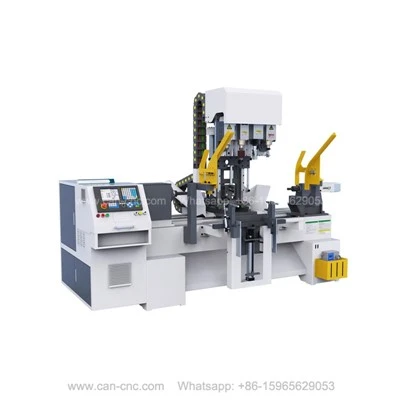
If you’re ready to start looking or have more questions about what a stone machine would cost for your specific setup, reach out to me to connect and chat through your options. Whether you’re a first-time buyer or looking to upgrade your current equipment, I’m here to help you find a machine that works for your budget and your workflow.
Wood Lathe Machine References
- National Stone, Sand & Gravel Association. (2023). Stone Fabrication Equipment Cost Analysis.
- Fabricators & Manufacturers Association, International. (2022). Small Business Guide to Stone Machinery Investment.
- Stone Age Magazine. (2023). Annual Stone Machinery Price Benchmark Report.
Jinan APEX CNC Technology Co., Ltd.
Jinan APEX CNC Technology Co., Ltd. is one of the most professional stone machine manufacturers and suppliers in China, specialized in providing high quality products and service. Please feel free to buy high-grade stone machine for sale here from our factory. For more information, contact us now.
Address: YuanZhuang Industrial Park, Shizhong District, Jinan City, China
E-mail: info@apex-cnctech.com
WebSite: https://www.can-cnc.com/
