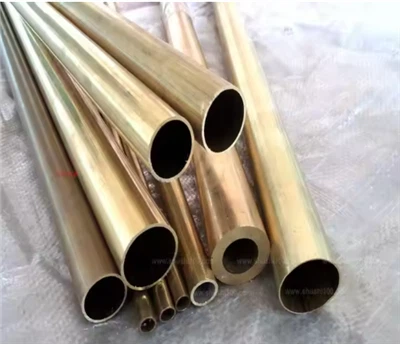
If you’ve ever wandered through a manufacturing plant, stepped into an auto parts workshop, or even peeked inside a high-end kitchen appliance factory, you’ve likely encountered two tiny but critical components at the heart of most processes: copper strip and aluminum strip. As a third-generation copper strip supplier who’s spent the last 18 years standing on factory floors, watching clients sort through material specs, and troubleshooting everything from power grid failures to faulty HVAC components, I’ve learned that there’s no one-size-fits-all answer to which metal strip is better. It all comes down to performance, and performance isn’t just about picking the “cheapest” option—it’s about matching the material to the job, avoiding costly downtime, and making sure your finished product stands the test of time. Copper Strip
A lot of folks come to me first asking about price, and that’s fair—budgets matter. But what they don’t always stop to ask is how that price translates to real-world performance, especially when you’re dealing with applications that operate 24/7, in extreme temperatures, or under heavy electrical load. Let’s start with the basics of electrical conductivity, because that’s where copper and aluminum first part ways, and where so many critical mistakes get made. I once had a client who built a commercial LED lighting line using aluminum strip for the busbars, thinking it was a steal. Within six months, half their installations were failing. When we pulled a sample, the aluminum had corroded at the connection points, and the resistance was so high that the bulbs weren’t getting enough power—so they were burning dim, and the company had to send technicians back to replace every unit. That same client now uses our oxygen-free copper strip for all their busbar assemblies, and their failure rate has dropped to less than 0.1%. Why? Copper has an electrical conductivity of approximately 59.6 x 10^6 S/m, while aluminum comes in at around 37.7 x 10^6 S/m. What that number means in practical terms is that for the same cross-sectional area, a copper strip can carry 60% more electrical current than an aluminum strip. If you try to compensate for that lower conductivity by using a thicker aluminum strip, you end up with a part that’s heavier, more prone to bending during installation, and more expensive than a comparable copper strip—so the supposed “savings” vanish faster than steam on a hot radiator.
But electrical performance isn’t just about conductivity—it’s about durability at connection points. That’s another area where aluminum struggles, and it’s a problem that pops up again and again. Aluminum forms a hard, brittle oxide layer (Al2O3) almost instantly when exposed to air. That layer has a high electrical resistance, so when you crimp or bolt aluminum strip to a terminal, the oxide layer can create a loose, high-resistance connection that heats up over time. In extreme cases, that heat can cause fires—we’ve all heard stories of attic wiring fires, and those often stem from improper aluminum connections. Copper, on the other hand, forms a thinner, more stable oxide layer (Cu2O) that doesn’t insulate nearly as much, and it’s easier to create a tight, low-resistance connection. I’ve seen aluminum work done right, mind you—if you use special anti-oxidation compounds and torque-controlled fasteners, you can make it work for low-load applications. But for anything that carries heavy current, or that needs to stay connected for decades with minimal maintenance, copper strip is the safer, more reliable choice.
Next up, thermal performance. This is another area that trips up a lot of design engineers, especially in applications like heat exchangers, power inverters, and even electric vehicle battery cooling systems. Copper is a far better thermal conductor than aluminum—roughly 401 W/m·K compared to aluminum’s 205 W/m·K. What that means is that copper dissipates heat twice as efficiently as aluminum. Let’s take electric vehicle (EV) battery packs as an example, since that’s a booming market right now. EV batteries are extremely sensitive to temperature: if they get too hot, their lifespan drops dramatically, and there’s a risk of thermal runaway. The cooling channels inside most modern EV battery packs are made from metal strips, and many manufacturers initially tried aluminum to save weight and cost. But as battery sizes have gotten larger, the heat load has gone up, and those aluminum channels couldn’t dissipate heat fast enough. I recently supplied custom copper heat exchanger strips to a leading EV component maker who switched from aluminum to copper mid-production, and they reported a 32% drop in battery operating temperature, which translated to a 15% increase in battery lifespan. That’s not a trivial number—for a vehicle that costs $50,000, extending battery life by 15% is worth thousands of dollars, and saves customers from having to replace a battery every 6-8 years.
Weight is the next big performance factor, especially in transportation and aerospace applications. Aluminum is about a third lighter than copper—2.7 g/cm³ vs. copper’s 8.96 g/cm³. That’s a huge advantage if you’re trying to cut down on vehicle weight to improve fuel efficiency or EV range. For things like door trim strips or small connectors in cars, where the load is low, aluminum can make perfect sense. But here’s the catch: weight only matters if you don’t have to add extra material to compensate for other shortcomings. If you need a part that carries 100 amps of current, an aluminum strip has to be 60% thicker than a copper strip to do the same job. So a 10mm thick copper strip vs. a 16mm thick aluminum strip—by the time you add that extra thickness, the weight difference shrinks, and you end up with a bulkier part that’s harder to fit into tight spaces. I worked with a drone manufacturer a few years ago that tried using aluminum strip for their motor windings, hoping to cut weight. The aluminum windings were 25% lighter, but they were also 40% wider, which meant they had to redesign the motor housing, adding weight back. When they switched to our thinner, high-purity copper strip, they were able to keep the same motor size, reduced the overall drone weight by 8%, and improved flight time by 12%. It’s all about tradeoffs—aluminum’s light weight is a win for low-load, space-unconstrained parts, but it can become a liability if you have to adjust the entire design to make up for its other limitations.
Corrosion resistance is another performance metric that’s often overlooked until it’s too late. Both metals corrode, but in very different ways, and that makes a big difference depending on the environment the part operates in. Copper is naturally corrosion-resistant, forming a patina (that greenish layer you see on old copper roofs) that acts as a barrier, stopping further corrosion. It holds up really well in most indoor environments, and even in outdoor areas with moderate humidity—think gutters, architectural trim, or marine components that are coated. Aluminum, meanwhile, forms that hard oxide layer I mentioned earlier, which actually protects it from further corrosion in most environments. The problem with aluminum is that it corrodes quickly in saltwater or areas with high levels of acid or alkaline chemicals. I had a client in the fishing industry who used aluminum strip for fishing boat terminals. Within two years, the terminals were pitted and corroded, because saltwater breaks down the aluminum oxide layer. They switched to our tin-plated copper strip (we offer custom plating too, if that’s what you need) and those terminals are still working perfectly after five years. Copper, on the other hand, can be prone to corrosion in acidic environments like industrial chemical plants, though we can add coatings like nickel or tin to copper strip to make it even more resistant. The takeaway here is: if your part is in a high-salt, high-acid environment, copper (especially coated copper) will outperform aluminum by a wide margin. If it’s in a mild, dry environment, either can work, but you have to account for the connection and load requirements.
Formability and flexibility—these are key for parts that need to be bent, stamped, or shaped during manufacturing. Copper has excellent formability, especially our high-purity, annealed copper strips, which can be bent into tight corners, stamped into intricate shapes, and rolled without cracking. We supply copper strip for things like electrical contacts, which have to be stamped into tiny, precise shapes, and our clients tell us the copper forms consistently, with very few scrap parts. Aluminum is also formable, but it’s more prone to cracking when bent tightly, especially if it’s a high-strength grade. I once saw a client try to bend a 1mm thick aluminum strip into a 5mm radius for a smartphone component—half of the parts cracked, because aluminum doesn’t have the same ductility as copper. For deep drawing or precision stamping applications, copper’s ductility leads to lower scrap rates, which saves money in the long run. That said, aluminum is lighter and easier to work with for very thin, low-load parts, so it’s still a good choice for things like packaging or non-critical decorative components.
Cost is always a consideration, but it’s important to distinguish between upfront cost and total cost of ownership. Let’s do a quick comparison for a 1-meter-long strip that carries 100 amps of current. A standard bare copper strip (0.5mm thick, 20mm wide) costs about $0.85 per meter. To carry the same 100 amps, an aluminum strip needs to be 0.8mm thick, 30mm wide, and that costs about $0.70 per meter—so upfront, aluminum is cheaper, right? But wait, you have to add the cost of extra fasteners, because the connection is harder to secure, plus the cost of anti-oxidation compound, plus the cost of replacing the part every few years if it’s in a harsh environment. Over 10 years, that aluminum strip will cost you an average of $1.20 per meter in maintenance and replacement, while the copper strip will cost $0.85—so copper is actually cheaper over time. I see this all the time with new clients: they focus on the upfront price tag, but they don’t account for the hidden costs of downtime, replacements, and repairs. As a copper strip supplier, I’m not here to tell you that copper is always better—if you’re making a disposable packaging part or a low-load decorative trim, aluminum makes perfect sense. But if you’re making a part that needs to last 10+ years, carry heavy current, or operate in a demanding environment, copper’s higher upfront cost pays for itself in performance and reliability.
Now, I’ll be honest—there are areas where aluminum is a clear winner, and I don’t shy away from that. For example, in overhead power lines, aluminum is the standard for large-scale transmission. It’s lightweight, cheap, and when it’s used in stranded wire with steel reinforcement (ACSR), it can handle high loads over long distances without adding too much weight. That makes total sense for power lines, where you’re not dealing with small, tight components, and the connection points are designed to handle aluminum’s quirks. But when you get to the end of that power line, where it connects to a transformer or a home circuit, you almost always see copper connectors. Why? Because the aluminum line’s large cross-section and ACSR reinforcement work for long distances, but at the point of use, you need a reliable, low-resistance connection that won’t fail over time. That middle ground is where engineers really have to do their homework: aluminum works great for some large, low-complexity applications, but copper is superior for most precision, high-load, or long-life parts.
At the end of the day, the choice between copper strip and aluminum strip comes down to three questions: How much current does your part need to carry? What’s the operating environment? And how long do you need it to last? As someone who’s worked with both materials for decades, I’ve seen clients waste thousands of dollars choosing the cheaper option only to have to fix mistakes later, and I’ve seen others get fantastic results by picking the right material for the job. If you’re working on a new project, and you’re not sure which strip will perform best—whether you need custom widths, thicknesses, or coatings to meet your specs—reach out to our team. We don’t just sell copper strip; we help clients figure out what material will save them time, money, and hassle in the long run. Don’t guess at your component specs—let’s work together to build a part that works as hard as your business does.
Copper References:
- ASM International. (2006). Copper and Copper Alloys: Properties and Processing. ASM Handbook, Vol. 2.
- Davis, J. R. (Ed.). (2001). Aluminum and Aluminum Alloys. ASM International.
- Electric Power Research Institute (EPRI). (2019). Guide to Electrical Conductor Selection for Distribution Systems. EPRI Press.
- Kubota, J. (2021). Thermal Management for Electric Vehicle Batteries. Journal of Power Sources, Vol. 498, 129875.
- Metals Handbook. (1990). Corrosion: Materials, Vol. 13. ASM International.
Gnee Steel (Tianjin) Co., Ltd.
Gnee Steel (Tianjin) Co., Ltd. is one of the leading copper strip manufacturers and suppliers in China. We warmly welcome you to buy discount copper strip for sale here from our factory. All our products are with high quality and competitive price. Contact us for more cheap products.
Address: No.4-1114, Beichen Building, Beicang Town, Beichen District, Tianjin, China
E-mail: sales@gneemetal.com
WebSite: https://www.chinacopperalloys.com/
