When I first started working with LED bathroom mirrors back in 2018, I’ll admit I didn’t pay much attention to color temperature. My job was simple: source sleek mirrors that matched modern bathroom designs, make sure the LEDs didn’t burn out too quickly, and keep prices fair for contractors and homeowners. That all changed on a Tuesday morning when a plumber named Mark showed up at our warehouse with a half-installed mirror and a very frustrated client on the line. LED Bathroom Mirrors

“Your mirror’s making my wife look like a corpse,” he said, holding up his phone to show a photo of a woman standing in front of it—her skin had a sickly blue cast, her under-eyes looked ten times darker than they were, and even her lipstick read as a muted purple that had nothing to do with the shade she wore. I stepped over to our sample wall, where we had a few different LED mirrors set up, and flipped through the switches. There it was: the cheap, cool 5000K mirror we’d picked up from a new supplier three months prior. That day, I learned color temperature isn’t just a random number on a spec sheet—it’s the difference between a mirror that helps someone feel confident and one that makes them avoid it entirely.
So what is color temperature, exactly? I’ve had to explain this a hundred times to contractors, interior designers, and even regular folks who just want their bathroom to feel good. At its core, color temperature is measured in Kelvin (K) and describes how warm or cool a light source appears. Think of a blacksmith’s forge: when metal is first heated, it glows red (around 1000K to 2000K, that’s warm light), gets brighter to yellow (2000K to 3000K, which is like old incandescent bulbs), and eventually shifts to blue-white as it gets even hotter (4000K to 6500K, that’s cool light).
But here’s the key part: not all Kelvin numbers work for bathrooms. Every room has different needs, and bathrooms aren’t just for showering—they’re for shaving, applying makeup, tweezing eyebrows, checking for acne, even picking out which shirt to wear that day. I’ve seen homeowners put up with bad mirror light for years because they don’t realize there’s a better option, so let’s break down the numbers I actually recommend for LED bathroom mirrors, based on eight years of customer feedback, product testing, and watching what works in real homes.
First, let’s rule out the extremes. Anything below 2700K is way too warm for a bathroom. I had a client a few years back who installed a 2200K mirror, thinking “warmer is better.” But that light is so yellow, it washed out his face—his dark skin tone looked flat, his gray beard lost contrast, and he couldn’t tell if he’d missed a spot while shaving. It made morning routines longer, not easier. On the other end, above 5000K is too cool, as Mark’s client found out. That harsh blue light doesn’t render skin tones accurately; it amplifies redness, makes under-eye circles pop more than they should, and can even give people headaches if they’re using the mirror for long periods applying foundation.
Now, the sweet spot most people don’t talk about is 3000K to 4000K. Wait, I know what you’re thinking—why a range, not a single number? Because every bathroom is different. Let’s start with 3000K. That’s warm white, right around the color of a sunset or a cozy incandescent bulb from the 2000s. It’s gentle on the eyes, renders skin tones really naturally, and feels relaxing. I recommend 3000K for bathrooms that are small, have little natural light, or where people prioritize relaxation over precise grooming. For example, a primary bathroom in a home where someone likes to take long, slow showers and do their skincare routine before bed—3000K works perfectly there. It’s not too yellow, not too bright, and feels like a warm hug when you walk in after a long day.
Then there’s 3500K to 4000K, which is often called “neutral white.” This is the middle ground that most of our repeat customers go for, once they’ve tried both ends. Let me explain why. If you have a bathroom that’s used by multiple people—say, a family with teens who need to apply makeup for school and parents who shave and do work calls in the morning—neutral white hits that balance. At 3500K, it’s just a touch warmer than daylight, but still bright enough to see fine details. At 4000K, it’s a little crisper, but not harsh. I tested this myself last year: I swapped out my old 5000K mirror for a 4000K one in my own bathroom. Within a week, my wife stopped complaining that her foundation looked too orange or too gray, and I could finally trim my nose hairs without squinting or nicking myself. That’s the thing about neutral color temperature—it doesn’t favor one task over another, which makes it ideal for shared spaces.
Wait, but what about people who do a lot of detailed grooming? I had a makeup artist client last year who only wanted 4500K, which is on the cool side of neutral, and she swore by it. Turns out, for precise tasks like contouring eyeliner or matching lipstick shades, a touch of cool light helps her pick out small details that warm light might wash out. But she also told me she only uses that mirror for makeup; when she’s done, she flips a separate light fixture in her bathroom that’s 3000K for the rest of her routine. That’s an important point I didn’t realize at first: it’s not an either/or. Some people need a little extra flexibility, which is why we started making our adjustable color temperature mirrors a couple years ago—they let you switch between warm, neutral, and cool with the touch of a button. It’s been a game-changer for people who use their bathroom for multiple purposes.
Now, I know what some of you might be thinking: “What about LED brightness? Does that matter too?” It does, but color temperature is the bigger factor when it comes to how you look in the mirror. I’ve had customers ask me for the brightest LED mirror we make, only to get it home and realize it’s 5000K and makes them look like they’re under a hospital lamp. Brightness is measured in lumens, and for bathrooms, we recommend between 1000 and 2000 lumens—enough to see every detail, but not so bright that it’s glaring, especially if you have sensitive eyes. But pairing that right lumen count with the right color temperature is where the magic happens.
Let’s talk about mistakes I see other LED bathroom mirror suppliers making, because that’s how I learned what not to do. A lot of cheap suppliers only stock 2700K or 5000K, because those are the easiest and cheapest LEDs to mass-produce. They don’t test how those lights look on real skin, in real bathrooms. I remember going to a trade show a few years back and seeing a booth where they had their mirrors set up in a dark room, with a white board behind them to make the light look better. But when I stepped outside into the natural light, the same mirror that looked “good” in their booth turned out to be a dingy yellow 2700K that made the paint in the demo bathroom look sick. That’s why all of our mirrors are tested in real bathroom settings—we put them in spaces with different sizes, different tile colors, different amounts of natural light, and we ask regular people (not just designers) to test them and give feedback. We’ve even had a few test users come into our warehouse to try the mirrors out, so we can see how they react to different color temperatures first-hand.
Another mistake is ignoring bathroom size. A small half-bath under 50 square feet doesn’t need a 5000K mirror—it’ll feel like a doctor’s office. A large primary bathroom over 100 square feet might need 4000K to make the whole space feel bright, not just a small corner around the mirror. That’s why we now give a quick guide on our product pages (and I write a lot of that copy, honestly) that says: small, low-light bathrooms = 3000K; shared family bathrooms = 3500K to 4000K; bathrooms with dedicated makeup stations = 4000K to 4500K; and anyone who loves warm, cozy vibes = 3000K.
I also want to talk about color rendering index, or CRI, because that’s a number that’s often overlooked but super important. CRI measures how accurately a light source shows the true color of an object, compared to natural daylight. It’s scored from 0 to 100, with 100 being perfect. For LED bathroom mirrors, you want a CRI of at least 90—anything lower than that, and you’re going to get those distorted skin tones we talked about earlier. A lot of cheap LED mirrors have a CRI of 70 or 80, which is fine for a closet light, but terrible for a mirror you’re going to use every day. When we started our company, we made the decision to only use LEDs with a CRI of 90 or higher, even if it meant our mirrors cost a little more upfront. We’d rather have a customer buy one mirror that works for them, instead of two mirrors because the first one was garbage.
I got a note last month from a customer in Portland, Oregon, where it rains 8 months out of the year. She told us she’d been using a 5000K mirror she bought online for years, but it made her always look tired and washed out. She swapped it for our 3500K mirror, and said “it’s like someone turned on a window in my bathroom. I can finally see my freckles and my real skin tone, not the gray version I was seeing before.” That’s the kind of feedback that makes all the late nights testing mirrors and arguing with suppliers about CRI worth it. For people who live in places with little natural light, color temperature isn’t just a preference—it’s a way to have natural light in their bathroom, even when the sky is gray.
What about older homes, or bathrooms with warm tile? I had a customer with a 1950s bathroom that had peach tile and brass fixtures, and she was worried a cool 4000K mirror would clash. We suggested 3000K, and she said it made her bathroom feel warm and cohesive, not like she’d added a random white mirror. That’s another thing I’ve learned: color temperature can complement your bathroom’s design, not just your face. If you have cool tile (gray, blue, white), 4000K will make that space feel crisp and modern. If you have warm tile (peach, beige, terracotta), 3000K will keep the space feeling cozy.
Now, I know some people might be tempted to go for the highest Kelvin number because they think it’s “daylight” and will be better for grooming. But that’s not how it works. Daylight is actually around 5500K, but that’s when the sun is high in the sky at noon. When the sun rises or sets, it’s 2000K to 3000K. The light in your bathroom isn’t noon sunlight—it’s a small, enclosed space, so you don’t need that harsh 5500K light. It’s like wearing sunglasses indoors that are too dark, except in reverse—you’re wearing light that’s too bright for the space, and it’s messing with your perception of color.
Over the years, we’ve fine-tuned our product line to focus on the color temperatures that actually work, and we’ve seen a lot of changes in the market. A few years ago, adjustable color temperature mirrors were a niche product, but now they’re one of our top sellers. People love being able to switch from warm light for a relaxing bath to neutral light for shaving, or a touch of cool light for applying makeup. We even have a few models with motion sensors that adjust the color temperature automatically, but that’s a whole other blog post for another day.
If you’re in the market for a new LED bathroom mirror, my advice is to skip the extremes. Avoid anything below 2700K or above 4500K unless you have a very specific reason. Think about how you use your bathroom: is it shared by multiple people? Do you do a lot of detailed grooming? Is your bathroom small or dark? Then pick the color temperature that matches your needs, not just the cheapest option or the highest Kelvin number on the box. And always check the CRI—90 or higher is non-negotiable if you want to see your true self.
At the end of the day, an LED bathroom mirror shouldn’t just be a functional piece of hardware. It should make you feel good when you walk into your bathroom first thing in the morning or last thing at night. That’s why we spend so much time testing and refining our mirrors—because we know how much a good morning starts with seeing your face clearly, feeling confident, and not having to squint at a mirror that’s either too yellow, too blue, or just plain wrong.
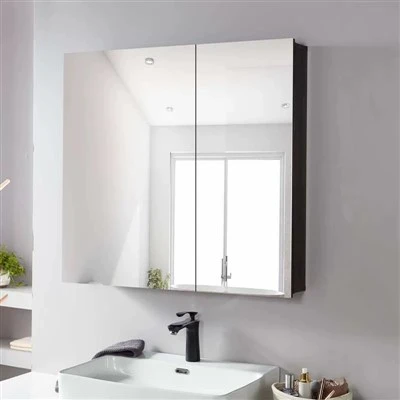
If you’re a homeowner looking to upgrade your bathroom, or a contractor working on a project and need reliable LED bathroom mirrors, we’d love to hear from you. We can talk through your space, your needs, and help you pick the right mirror—including the perfect color temperature—for your bathroom. Don’t hesitate to reach out to discuss your requirements.
Standard Bathroom Mirrors References
- International Commission on Illumination (CIE). (2018). Lighting for the built environment: CIE 157:2004.
- Rea, M. S. (Ed.). (2000). IES Lighting Handbook (10th ed.). Illuminating Engineering Society.
- Lin, Y., et al. (2020). The impact of color temperature on perceived indoor atmosphere and human comfort. Journal of Environmental Psychology, 68, 101407.
- American National Standards Institute (ANSI). (2019). Performance Standard for Electrical Luminaires for General Lighting.
Taizhou Zhiyuan Electronic Technology Co., Ltd.
As one of the most professional led bathroom mirrors manufacturers and suppliers in China, we’re featured by quality products and good service. Please rest assured to wholesale customized led bathroom mirrors from our factory. Welcome to contact us for free sample.
Address: Duqiao Town, Linhai City, Taizhou City, Zhejiang Province
E-mail: hsuming@zyledmirror.com.cn
WebSite: https://www.zyledmirror.com/
