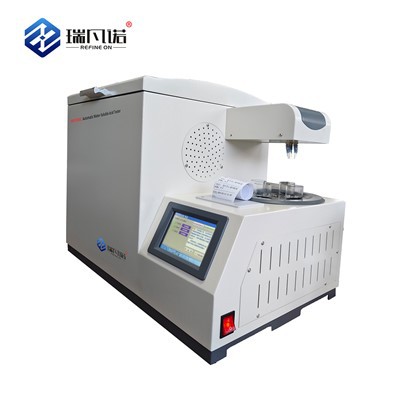
As a seasoned provider of Transformer Testers, I understand the critical role these devices play in ensuring the efficient and safe operation of transformers. One of the most important aspects of transformer testing is analyzing the harmonic content, which can significantly impact a transformer’s performance and lifespan. In this blog, I’ll delve into how our Transformer Testers are at the forefront of this essential testing process. Transformer Tester
Understanding Harmonics in Transformers
Before we explore how our testers work, it’s crucial to understand what harmonics are and why they matter in transformers. In an ideal electrical system, the voltage and current waveforms are purely sinusoidal, representing a single – frequency signal known as the fundamental frequency. However, in real – world applications, non – linear loads such as variable – speed drives, electronic ballasts, and computer power supplies introduce additional frequencies into the electrical system. These frequencies are integer multiples of the fundamental frequency and are called harmonics.
Harmonics in transformers can lead to several problems. They can cause overheating due to increased core and winding losses, which accelerate the aging of insulation materials and reduce the transformer’s lifespan. Additionally, harmonics can disrupt the normal operation of sensitive equipment connected to the same electrical system, leading to malfunctions, inaccurate readings, and even permanent damage. Therefore, accurately measuring the harmonic content of a transformer is essential for maintaining its reliability and performance.
How Our Transformer Testers Measure Harmonic Content
Signal Sampling
The first step in measuring the harmonic content of a transformer is to sample the voltage and current waveforms. Our Transformer Testers are equipped with high – precision sensors that can accurately capture these waveforms. These sensors are designed to have a wide bandwidth, allowing them to detect high – frequency harmonics without distortion.
The sampling process is based on the Nyquist theorem, which states that the sampling rate must be at least twice the highest frequency component of the signal to be accurately reconstructed. Our testers use sampling rates that far exceed this requirement, ensuring that even the highest – order harmonics can be precisely measured.
Once the waveforms are sampled, the analog signals are converted into digital form using analog – to – digital converters (ADCs). The ADCs in our testers have high resolution, which helps to provide accurate digital representations of the analog waveforms. This digital data is then processed further to extract the harmonic information.
Fourier Analysis
The most common method for analyzing the harmonic content of a waveform is Fourier analysis. Our Transformer Testers use a fast Fourier transform (FFT) algorithm, which is a computationally efficient version of the Fourier transform. The FFT algorithm decomposes the sampled voltage and current waveforms into their frequency components, allowing us to determine the amplitude and phase of each harmonic.
The FFT algorithm works by taking the sampled data in the time domain and transforming it into the frequency domain. In the frequency domain, each harmonic appears as a distinct peak at its corresponding frequency. The amplitude of each peak represents the magnitude of the harmonic, while the phase represents its relative position with respect to the fundamental frequency.
Our testers are programmed to perform FFT analysis on the sampled waveforms in real – time. This means that the harmonic content can be analyzed instantly, providing users with immediate feedback on the transformer’s performance. The results of the FFT analysis are displayed on the tester’s screen, showing the amplitude and phase of each harmonic up to a specified order.
Harmonic Spectrum Display and Analysis
The harmonic spectrum display on our Transformer Testers is a graphical representation of the harmonic content of the transformer. It shows the amplitude of each harmonic as a function of its frequency, allowing users to quickly identify any significant harmonic distortion.
In addition to the graphical display, our testers also provide numerical data for each harmonic. This data includes the amplitude, phase, and percentage contribution of each harmonic relative to the fundamental frequency. Users can use this information to analyze the harmonic content in detail and determine whether it exceeds the acceptable limits.
Our testers also have built – in analysis tools that can help users interpret the harmonic data. For example, they can calculate the total harmonic distortion (THD) of the voltage and current waveforms. THD is a measure of the overall harmonic distortion in a waveform and is defined as the ratio of the root – mean – square (RMS) value of all harmonic components to the RMS value of the fundamental component. By monitoring the THD, users can assess the severity of the harmonic distortion and take appropriate actions to mitigate it.
Applications of Harmonic Testing with Our Transformer Testers
Power Quality Assessment
One of the main applications of our Transformer Testers is power quality assessment. By measuring the harmonic content of transformers, we can determine the overall quality of the electrical power supplied to a facility. High levels of harmonics can indicate problems with the electrical system, such as the presence of non – linear loads or faulty equipment. Our testers can help identify these issues so that corrective measures can be taken to improve power quality.
Equipment Protection
Harmonics can cause damage to transformers and other electrical equipment over time. By regularly testing the harmonic content of transformers using our testers, users can detect potential problems early and take preventive measures to protect their equipment. For example, if the harmonic levels are found to be excessive, filters can be installed to reduce the harmonic distortion and protect the equipment from damage.
Energy Efficiency Improvement
Harmonics increase the losses in transformers, which reduces their energy efficiency. By measuring the harmonic content and taking steps to reduce it, users can improve the energy efficiency of their transformers. This not only saves energy but also reduces operating costs in the long run.
Why Choose Our Transformer Testers for Harmonic Testing
High Accuracy
Our Transformer Testers are designed to provide highly accurate measurements of harmonic content. The high – precision sensors and advanced FFT algorithms ensure that even the smallest harmonic components can be detected and measured accurately.
User – Friendly Interface
The testers have a user – friendly interface that makes it easy for operators to perform harmonic testing. The graphical display and numerical data are presented in a clear and intuitive manner, allowing users to quickly understand the test results.
Durability and Reliability
Our testers are built to withstand the harsh environments typically encountered in electrical testing. They are made from high – quality materials and are rigorously tested to ensure their durability and reliability.
Comprehensive Testing Features
In addition to harmonic testing, our Transformer Testers offer a wide range of other testing features, such as insulation resistance testing, turns ratio testing, and winding resistance testing. This makes them a versatile tool for comprehensive transformer testing.
Conclusion

Measuring the harmonic content of a transformer is a critical aspect of ensuring its efficient and safe operation. Our Transformer Testers are equipped with the latest technology and features to accurately measure harmonics, analyze the results, and provide valuable insights into the transformer’s performance. Whether you are involved in power quality assessment, equipment protection, or energy efficiency improvement, our testers can help you achieve your goals.
Transformer Tester If you are interested in purchasing our Transformer Testers for harmonic testing or any other transformer testing applications, we invite you to get in touch with us for a detailed discussion. Our team of experts is ready to provide you with the best solutions tailored to your specific needs.
References
- Grover, William M. "Transformer Engineering: Design and Practice." CRC Press, 2018.
- Brown, Donald R. "Electric Power Systems Components." McGraw – Hill, 2012.
- IEEE Standard 519 – 2014, "IEEE Recommended Practices and Requirements for Harmonic Control in Electrical Power Systems."
Refine On (Hebei) Electric Power Technology Co., Ltd.
Refine On (Hebei) Electric Power Technology Co., Ltd. is one of the most reliable transformer tester manufacturers and suppliers in China, also supports customized service. Please feel free to wholesale advanced transformer tester at competitive price from our factory. Contact us for quotation.
Address: Building 13, Liandong U Valley, No.64, Jing SAN South Street, Economic Development Zone, Mancheng District, Baoding City, China
E-mail: victor@transformer-test.com
WebSite: https://www.transformer-test.com/
