As a supplier of guyed wire towers, I’ve witnessed firsthand the widespread use of these structures across various industries. Guyed wire towers are known for their cost – effectiveness, stability, and relatively easy installation. However, one aspect that often doesn’t receive enough attention is their acoustic effects. In this blog, I’ll delve into the acoustic characteristics of guyed wire towers, exploring how they interact with sound and what implications this has for different applications. Guyed Wire Tower

Basic Acoustic Principles
Before we discuss the specific acoustic effects of guyed wire towers, it’s essential to understand some basic acoustic principles. Sound is a mechanical wave that travels through a medium, such as air. When sound waves encounter an object, several things can happen: they can be reflected, absorbed, transmitted, or diffracted.
Reflection occurs when sound waves bounce off a surface. The angle of reflection is equal to the angle of incidence, similar to the way light reflects off a mirror. Absorption happens when the energy of the sound wave is converted into other forms of energy, such as heat, within the material of the object. Transmission means that the sound wave passes through the object, and diffraction is the bending of sound waves around the edges of an object.
Acoustic Reflection from Guyed Wire Towers
Guyed wire towers are typically made of metal, which is a good reflector of sound. The main tower structure, as well as the guy wires themselves, can reflect sound waves. The reflection pattern depends on the shape, size, and orientation of the tower and the frequency of the sound.
For low – frequency sounds, the tower and wires may act as large reflecting surfaces. The reflected sound can interfere with the direct sound, creating regions of constructive and destructive interference. Constructive interference occurs when the reflected and direct sound waves are in phase, resulting in an increase in sound intensity. Destructive interference, on the other hand, happens when the waves are out of phase, leading to a decrease in sound intensity.
In some cases, the reflected sound can cause echoes. Echoes are particularly noticeable in open areas where there are few other sound – absorbing surfaces. For example, in a rural setting with a guyed wire tower, a loud noise, such as a gunshot or a vehicle horn, may produce an echo that can be heard for several seconds.
Acoustic Absorption by Guyed Wire Towers
While metal is not a good absorber of sound, the guyed wire tower may still absorb some sound energy. The absorption mainly occurs at the joints and connections of the tower structure. These areas may have small gaps or irregularities where sound waves can enter and be dissipated.
The guy wires themselves may also contribute to a small amount of absorption. As the sound waves interact with the wires, some of the energy is converted into mechanical vibrations of the wires. Although this absorption is relatively small compared to the reflection, it can still have an impact on the overall acoustic environment.
Acoustic Transmission through Guyed Wire Towers
Sound can also be transmitted through the guyed wire tower. The metal structure of the tower can act as a conductor of sound waves. When a sound source is in close proximity to the tower, the sound waves can travel through the tower and be radiated on the other side.
This transmission effect can be significant in some applications. For example, in a communication tower where there are loud equipment or machinery nearby, the sound can be transmitted through the tower and potentially cause noise pollution in the surrounding area.
Acoustic Diffraction around Guyed Wire Towers
Diffraction is an important acoustic effect when it comes to guyed wire towers. The presence of the tower and its guy wires can cause sound waves to bend around them. This effect is more pronounced for high – frequency sounds, as they have shorter wavelengths and are more easily diffracted.
The diffraction of sound waves around the tower can create shadow zones, where the sound intensity is significantly reduced. These shadow zones can be useful in some situations, such as in noise – sensitive areas. For example, if a guyed wire tower is placed between a noisy industrial area and a residential neighborhood, the diffraction of sound waves around the tower can help reduce the noise level in the residential area.
Applications and Implications of Acoustic Effects
The acoustic effects of guyed wire towers have several implications for different applications.
Telecommunication
In the telecommunication industry, guyed wire towers are commonly used to support antennas. The acoustic effects of these towers can impact the performance of the communication systems. For example, the reflection of sound waves from the tower can cause interference with the radio signals. The constructive and destructive interference patterns can affect the signal strength and quality, especially in areas where there are multiple towers in close proximity.
On the other hand, the diffraction of sound waves around the tower can be used to advantage. By strategically placing the tower, the shadow zones created by diffraction can be used to reduce the interference from external noise sources, such as traffic or industrial machinery.
Wind Energy
In the wind energy sector, guyed wire towers are used to support wind turbines. The acoustic effects of these towers can interact with the noise generated by the wind turbines. The reflection and transmission of sound from the tower can amplify or modify the turbine noise, which may have implications for the noise pollution in the surrounding area.
However, the diffraction of sound waves around the tower can also help in reducing the noise impact. By carefully designing the layout of the wind farm and the placement of the guyed wire towers, it is possible to minimize the noise exposure in nearby communities.
Broadcasting
For broadcasting towers, the acoustic effects can influence the quality of the broadcast. The reflection of sound waves from the tower can cause echoes and interference, which can degrade the audio quality. The absorption and transmission of sound through the tower can also affect the overall sound balance.
Broadcasters need to take these acoustic effects into account when designing the tower and the broadcast system. They may need to use sound – absorbing materials or adjust the orientation of the tower to minimize the negative acoustic impacts.
Considerations for Design and Installation
As a guyed wire tower supplier, we need to consider the acoustic effects during the design and installation process.
Material Selection
The choice of materials for the tower can have a significant impact on its acoustic properties. While metal is the most common material for guyed wire towers, we can explore the use of sound – absorbing materials in certain areas of the tower, such as the joints and connections. This can help reduce the reflection and transmission of sound.
Tower Geometry
The shape and size of the tower can also affect its acoustic performance. A tower with a more streamlined shape may cause less reflection and diffraction of sound waves compared to a tower with a more complex geometry. We can optimize the tower design to minimize the acoustic effects, especially in noise – sensitive areas.
Placement
The placement of the guyed wire tower is crucial. By considering the surrounding environment and the direction of the sound sources, we can position the tower to take advantage of the diffraction effect and create shadow zones. This can help reduce the noise impact on nearby communities or sensitive areas.
Conclusion
In conclusion, the acoustic effects of guyed wire towers are complex and have significant implications for various industries. As a supplier, we have a responsibility to understand these effects and take them into account during the design, installation, and maintenance of the towers.
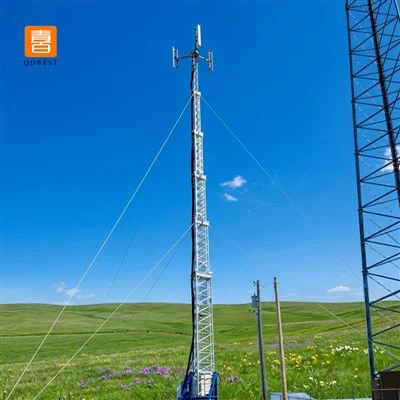
By carefully considering the acoustic properties of the tower, we can not only improve the performance of the systems supported by the tower but also minimize the negative impact on the surrounding environment. Whether it’s in telecommunication, wind energy, or broadcasting, the acoustic effects of guyed wire towers play an important role in ensuring the efficient and sustainable operation of these industries.
Tubular Tower If you’re interested in learning more about our guyed wire towers or have specific requirements regarding their acoustic performance, we’d be more than happy to discuss your needs. Contact us to start a procurement conversation and find the best solution for your project.
References
- Beranek, Leo L. "Acoustics." American Institute of Physics, 1954.
- Kinsler, Lawrence E., et al. "Fundamentals of Acoustics." John Wiley & Sons, 2000.
- Fahy, Frank J. "Sound and Structural Vibration: Radiation, Transmission and Response." Academic Press, 1985.
Qingdao BEST Steel Structure Co., Ltd.
Qingdao BEST Steel Structure Co., Ltd. is one of the most professional guyed wire tower manufacturers and suppliers in China. We warmly welcome you to buy customized guyed wire tower made in China here from our factory. If you have any enquiry about OEM service, please feel free to email us.
Address: Jiaobei Industrial Park, Qingdao, China
E-mail: sales@qdbsstower.com
WebSite: https://www.qdbsstower.com/
