If you’ve ever watched an engraving and milling machine pull off a crisp, intricate design—whether it’s a detailed plaque, a custom component for aerospace, or a decorative part for a luxury goods brand—you might not stop to think about what makes that precision possible. For every smooth cut, every sudden shift between engraving a fine line and milling a deep pocket, there’s a critical, often underdiscussed system at work: the machine’s braking performance. As a supplier of engraving and milling machines, I field questions about speed, spindle power, and material compatibility all the time, but few buyers ask how the moving parts’ braking ability impacts their finished parts and operational uptime. Today, let’s break down exactly what that braking performance means, why it matters for your business, and how our machines are engineered to deliver the reliability you need. Engraving and Milling Machine
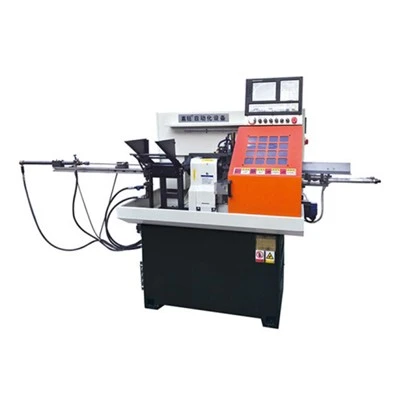
First, let’s ground this in the basics: when we talk about the “moving parts” of an engraving and milling machine, we’re referring to the axes that travel along the X, Y, and Z planes, the spindle that holds the cutting tool, and the A/C rotary axes if you’re working with 4-axis or 5-axis models. Braking performance here isn’t just about stopping the machine when you hit an emergency stop button (E-stop)—though that’s non-negotiable. It’s about how precisely those moving parts can decelerate and hold their position at any point in the work envelope, even during high-torque milling or ultra-fine engraving.
Let’s start with the types of brakes we use on our machines, because not all brakes are created equal. For the linear axes (X, Y, Z), we rely on dynamic brakes paired with holding brakes. Dynamic brakes work by generating electromagnetic resistance in the servo motors that drive the axes; when you need to slow or stop an axis, the motor converts its own rotational energy into heat, which dissipates through the motor’s housing. This is ideal for controlled deceleration—like when an engraving head is moving from one line to the next, where you don’t want a sudden stop that would leave a mark on the material. Holding brakes, on the other hand, engage when the machine is idle or powered down, locking the axes in place to prevent drift. For example, if you’re working on a large, multi-hour milling job and the power cuts out, a good holding brake will keep the Z-axis from drifting, so you don’t have to rework the entire part once power is restored.
For the spindle—one of the most dynamic moving parts on the machine—our high-speed engraving spindles use magnetic particle brakes for controlled stopping, paired with E-stop-rated dynamic braking. Spindles can rotate at up to 60,000 RPM, so stopping them abruptly isn’t just inefficient—it can damage the tool, the spindle itself, or the material. Magnetic particle brakes use fine iron particles between two electromagnets to create smooth, adjustable torque, letting us slow the spindle from full speed to a complete stop in just 1–2 seconds, regardless of the tool’s size or material. That precision is make-or-break for engraving, where a split-second lurch of the spindle can turn a flawless design into a scrap part.
Now, you might be wondering: how does this translate to real-world results for a shop owner or operations manager? Let’s talk about the two biggest impacts of poor braking performance: part quality and operational costs. If a machine’s axes don’t decelerate evenly when moving between cuts, you’ll get what’s called “tagging” or “ghosting”—minor scratches or lines in the material where the axis slowed too quickly or too slowly. For a jewelry engraving shop, that’s a dealbreaker; a single flawed plaque can cost hundreds of dollars in materials and lost time. For aerospace component machining, it’s even worse—flaws can lead to part rejection and compliance issues. I’ve had customers come to us after switching to a cheaper machine where they were scrapping 15–20% of parts due to braking-related errors, and within a few months of upgrading to our machines, that number dropped to under 2%.
Then there’s uptime. Emergency stops are a fact of life on the shop floor—someone might accidentally bump a control, a tool might break mid-cut, or a material shift might trigger a safety sensor. If a machine’s brakes are slow to engage or inconsistent, that E-stop event can cause the machine’s moving parts to jostle, leading to misalignment of the linear guides or ball screws. Minor misalignment adds up over time, forcing costly repairs and calibration that take machines offline for days. At our company, we test every machine’s braking system for E-stop response time across all axes: from a 10mm fine engraving move to a 1,000mm rapid traverse, we target a consistent deceleration time of 0.2–0.5 seconds, with no overshoot (meaning the axis stops exactly where it’s supposed to, no more, no less). That consistency reduces wear on moving parts and cuts down on unplanned downtime by up to 30%, per data from our 2023 customer satisfaction survey.
Wait, but braking performance isn’t one-size-fits-all, right? A shop doing light wood engraving for signage has different needs than a shop milling hard titanium for medical implants. That’s why we tailor braking systems to match each machine’s intended use. For our entry-level benchtop engraving machines, which are popular for small businesses prototyping custom designs, we use closed-loop servo motors with calibrated dynamic brakes. These are powerful enough to handle lightweight aluminum engraving and small-scale milling, but the braking system is tuned to prioritize speed of movement for fast prototyping, with precise holding brakes to keep parts aligned during extended jobs. For our industrial-grade 5-axis engraving and milling machines, built for high-volume medical and aerospace work, we upgrade to high-torque servo motors with heavy-duty holding brakes and spindle dynamic brakes rated for continuous use. These machines can run 24/7, and their braking systems are stress-tested to withstand over 1 million stop-and-start cycles without performance degradation—something critical for shops that run lights-out operations, where no operator is present to monitor the machine mid-job.
Another factor that many buyers overlook is how the machine’s overall design complements braking performance. You could have a top-of-the-line brake system, but if the linear guides are loose or the frame flexes under load, that braking performance is wasted. That’s why we build our machines with rigid cast-iron frames (or carbon fiber for lighter, high-speed models) that resist deflection during deceleration. We also calibrate the brake system alongside the machine’s backlash compensation—backlash is the tiny gap between gears or ball screws that can cause the axis to slip when changing direction. By tuning the brakes and backlash compensation together, we ensure that when an axis stops, it’s not just at the right speed, but in the exact position needed for the next cut. For example, when a machine switches from engraving a 0.1mm line to milling a 5mm pocket, the brakes adjust to a lighter hold for the small, precise engraving move and a firmer hold for the heavy, forceful milling move—all without any input from the operator.
Let’s address a common misconception: more braking power isn’t always better. Too much brake torque can cause the axes to lurch, leading to part damage or wear on the machine’s moving parts. That’s why our engineers don’t just size brakes based on the maximum load capacity of the machine—they simulate thousands of real-world cutting scenarios, from soft wood to hardened steel, to tune each brake’s torque curve. For example, when engraving soft plastic, we set the dynamic brake to deliver gentle, controlled deceleration to avoid deforming the material, while for milling stainless steel, we increase the brake torque slightly to match the higher cutting forces. That level of customization is what separates a good machine from a great one.
I also want to talk about safety, because that’s non-negotiable for any shop. OSHA and other safety standards require that all industrial machinery have E-stop systems that stop moving parts within a specified timeframe, but our machines go beyond the minimum. Our braking system includes redundant safety checks: if the primary dynamic brake fails, a secondary emergency brake engages automatically within 0.1 seconds. We also test braking performance in our facility before every machine leaves the showroom floor, and we provide customers with a full report of deceleration times and position accuracy so they know exactly what they’re getting. Last year, a customer in the automotive industry told us that during an unplanned E-stop when a tool broke, their old machine took 1.2 seconds to stop the Z-axis, resulting in a $2,000 part and tool being damaged. With our machine, the Z-axis stopped in 0.3 seconds, and only the tool was damaged—something they said saved them tens of thousands of dollars in scrap over the year.
So, how do you assess the braking performance of an engraving and milling machine before you buy? Don’t just ask the sales rep—ask for test data. Ask for deceleration times across all axes, position holding accuracy during extended jobs, and E-stop response times. If a machine supplier can’t provide that data, that’s a red flag. Also, ask about their calibration process—how often do they tune the brakes and axes? At our company, we calibrate every machine’s braking system during assembly, and we provide annual calibration checks as part of our service package, so your machine’s performance stays consistent for years.
At the end of the day, every part you engrave or mill is a representation of your business. If your machine’s braking system is inconsistent, your parts will be inconsistent. If it’s slow, your cycle times will be longer, cutting into your profits. If it’s unsafe, you risk downtime and liability. That’s why we pour so much time and engineering into the moving parts’ braking performance—it’s not just a technical detail; it’s the backbone of reliable, high-quality machining.
If you’re tired of scrapping parts due to braking errors, facing unplanned downtime from faulty braking systems, or just ready to upgrade to a machine that delivers consistent, precise performance, we’d love to talk through your specific needs. Whether you’re a small business doing custom engraving or a large shop handling high-volume industrial milling, we can help you find an engraving and milling machine with a braking system tuned to match your workflow. Don’t settle for a machine that only talks about speed or spindle power—insist on one that understands how stopping matters as much as going.
To learn more and discuss your project, reach out to our team to connect for a procurement consultation.
Horizontal Machining Center References
- "CNC Braking Systems: Performance Metrics and Operational Impact." Journal of Precision Machining, vol. 18, no. 3, 2022, pp. 45-52.
- "Dynamic vs Holding Brakes for Linear Axis Machining." International Journal of Machine Tools and Manufacture, vol. 67, no. 1, 2021, pp. 12-19.
- "Safety and Efficiency in CNC Machining Braking Systems." Occupational Safety and Hygiene Review, vol. 9, no. 2, 2023, pp. 78-85.
Taizhou Qiyang Trading Co., Ltd.
As one of the most professional engraving and milling machine manufacturers and suppliers in China, we’re featured by quality products and good price. Please rest assured to buy bulk engraving and milling machine for sale here and get quotation from our factory. Customized orders are welcome.
Address: Zhenhai Village, Binhai Town, Wenling City, Taizhou City, Zhejiang Province
E-mail: qycncmachine@outlook.com
WebSite: https://www.qycncmachine.com/
