If you’ve ever worked with industrial piping systems—whether you’re a plant engineer, a procurement manager, or someone who specifies parts for chemical processing, oil and gas, or water treatment—you’ve almost certainly encountered EN 1092-1 flanges. They’re the workhorses of connecting pipes, valves, and equipment, designed to hold up to high pressure, temperature, and corrosive environments. But if you’ve dug into their specs, you’ve probably seen two ratings repeated over and over: PN and Class. At first glance, they might seem like interchangeable labels for pressure capability, but I’ve seen firsthand how confusing that mix-up can be—we once got a frantic call from a refinery that ordered PN16 flanges thinking they’d match their Class 150 valves, and half the shipment had to be reworked. That mistake cost them downtime and us a lot of sleep, so I’ve made it my job to get the difference right, not just from a textbook, but from years of helping clients get the right flanges for their projects. En1092-1 Flange

Let’s start with what EN 1092-1 is, for anyone new here. It’s a European standard that standardizes steel flanges for piping systems, covering everything from shape (like slip-on, weld neck, blind) to materials, dimensions, and pressure ratings. It replaced a bunch of older national standards across Europe, so now flanges from Germany, France, Italy, or Spain all follow the same rules. That’s a huge win for global projects, but it also meant a shift in how we talk about pressure ratings—hence PN vs. Class, two systems that sometimes overlap but are far from the same.
First up: PN. PN stands for “Nominal Pressure,” and it’s a metric-based rating unique to European standards like EN 1092-1. The key thing to know about PN is that it’s not an absolute maximum pressure. Instead, it’s a reference value for the flange’s pressure capability at a specific, standard temperature: 20°C (68°F) for carbon steel flanges, and even higher for stainless steel or alloy grades. That means a PN16 flange is rated for up to 16 bar (which is roughly 232 psi) at 20°C. But here’s the catch: pressure ratings change as temperature goes up. For example, the same PN16 carbon steel flange might only handle 10 bar at 200°C, because higher temperatures weaken the steel’s structural integrity. PN is also tied to specific dimensions: PN16 flanges have a different outer diameter, bolt size, and number of bolts than PN10 or PN25, so they’re physically not interchangeable with flanges of a different PN. I always tell clients to think of PN like a base rating—it’s the foundation, but you have to adjust it for your actual operating temperature.
Now, Class. Class is an imperial-based rating system that originated in American standards (like ASME B16.5) but is super common in global projects, especially those working with North American equipment. Unlike PN, Class is also a reference value, but its standard temperature is higher: 100°F (38°C) for carbon steel flanges, and that base rating changes with temperature too. A Class 150 flange, for example, has a base rating of 150 psi at 100°F. But like PN, that number drops as temperature rises. Class is also tied to physical dimensions, which is why that refinery mix-up happened: a Class 150 flange and a PN16 flange are often similar in their base ratings (150 psi vs. 16 bar is almost the same, around 232 psi vs. 217 psi) but their bolt patterns and outer diameters are slightly different, so you can’t bolt them together. That’s a critical point—just because two ratings are close in base pressure doesn’t mean they’re compatible.
Wait a second, though—are there times when they line up? Kind of, at low temperatures. At 20°C, a Class 150 flange’s rating works out to roughly 225 psi, which is almost exactly 16 bar (232 psi), so that’s where the confusion starts. But once you get to higher temperatures, the numbers diverge. A Class 300 flange, for example, has a base rating of 300 psi, while a PN40 flange is 40 bar (580 psi) at 20°C. At 200°C, the Class 300 carbon steel flange drops to about 190 psi, while the PN40 carbon steel flange is still at 28 bar (around 406 psi)—so now they’re way off, even if they had similar base ratings at room temperature. That’s why guessing based on base numbers is a bad call.
Another big difference is how they’re used in different regions. If you’re working on a project in Germany or the UK, you’ll almost spec PN ratings because that’s what their engineering teams are trained on. If you’re working in the US or Canada, Class is the default. But global projects mix these all the time—we recently did a job for a petrochemical plant in Singapore that used flanges supplied by a German manufacturer, valves from a US supplier, and piping from a South Korean firm, all requiring matching ratings. That’s when it’s not enough to just know PN vs. Class—you have to cross-reference the actual temperature-adjusted ratings for the exact material and flange type. For example, a slip-on PN16 flange in carbon steel has a 200°C rating of 10 bar, while a weld neck Class 150 carbon steel flange at the same temperature is 120 psi (roughly 8.2 bar)—so even their adjusted ratings are different, even though their base ratings are close. That’s the kind of detail that makes the difference between a safe system and a costly failure.
I should also mention that EN 1092-1 does actually reference Class ratings in some editions, right? Wait, yes—later revisions added cross-reference tables so that engineers can match PN and Class ratings for compatibility. But that table is only a guideline, not a rule. For example, EN 1092-1 says that PN16 is roughly equivalent to Class 150 for low-temperature service, but only for certain flange types, materials, and sizes. It’s not a one-to-one match across the board, which is why we always tell clients not to use that table as a standalone spec. One client tried that a few years back, ordered PN25 flanges thinking they were Class 300, and ended up with flanges that were too small for their valve’s bolt holes. We had to rush-make replacements, and that taught both of us a lesson about not relying on generic cross-references.
Let’s break down the key differences to make this concrete, from what I’ve seen working with hundreds of clients: first, units. PN is metric (bar), Class is imperial (psi). Second, base temperature. PN uses 20°C, Class uses 100°F. Third, dimension standards. PN flanges follow EN’s dimensional specs, Class follows ASME B16.5, so bolt patterns, outer diameters, and hole sizes are different. Fourth, temperature adjustment curves. Every material (carbon steel, 304 stainless, 316 stainless, alloy 20) has its own curve for how pressure rating drops with temperature, so PN and Class curves are not identical. Fifth, regional convention. PN is standard in Europe, parts of Asia, and Africa; Class is standard in the Americas, parts of the Middle East, and global projects with US/North American leadership.
Now, what does this mean for someone ordering EN 1092-1 flanges? Let’s walk through a quick example. Suppose you have a piping system that operates at 12 bar, at a temperature of 180°C. If you spec PN, you need to pick a PN rating that can handle 12 bar at 180°C. For carbon steel, PN25 has a rating of roughly 16 bar at 20°C, and at 180°C, that drops to about 12 bar—perfect, so PN25 is the right call. If you tried to spec Class, you’d need a Class rating that can handle 12 bar (about 174 psi) at 180°C. A Class 300 carbon steel flange at 180°C only has a rating of around 140 psi, which is too low—so you’d need a Class 600, which at that temperature is rated for over 200 psi, enough for your 174 psi requirement. Even though the base ratings for PN25 and Class 300 are close (25 bar vs. 300 psi), at operating temperature, they’re completely different. That’s why mixing these two ratings without checking the adjusted performance is such a common mistake.
Another thing I’ve learned is that not all flanges are rated the same, even within PN or Class. A blind flange (the solid one used to cap a pipe) has a different pressure rating than a slip-on flange, which is different than a weld neck. For example, a PN16 slip-on flange might be rated for 16 bar at 20°C, while a PN16 weld neck flange in the same material is rated for 19 bar at the same temperature. Flange type changes the rating, so you can’t just go by PN or Class alone—you have to specify the type too, which is part of EN 1092-1’s scope.
I can’t stress enough how costly mixing these up can be. A few years back, we had a client in the food and beverage industry that needed flanges for a stainless steel piping system for a beer processing line. They ordered PN10 flanges because they’d used that rating for a previous project, but their new system operated at 12 bar at 50°C. PN10 at 20°C is 10 bar, and at 50°C it drops to 9 bar—so the flanges were underrated. They caught it during pressure testing, before the system was put into service, but that still cost them three days of downtime and reworking the whole flange set. If they’d run the numbers against Class, a Class 150 flange at 50°C is rated for about 175 psi (roughly 12 bar), which would have been the right call for their application. That incident made us start including a free rating check with every order, so clients don’t have to do all the math on their own.
So, when should you use PN, and when should you use Class? If your project follows European or international standards that align with EN 1092-1, PN is the more straightforward choice, as it’s tailored to that standard’s dimensions and testing. If you’re working with equipment that uses ASME B16.5 flanges (common in North America), Class is your go-to, but you’ll need to verify compatibility with EN flanges if you’re mixing and matching. And for global projects that cross regions, always get a material-specific, temperature-adjusted rating from your flange supplier—don’t rely on base numbers or generic cross-references.
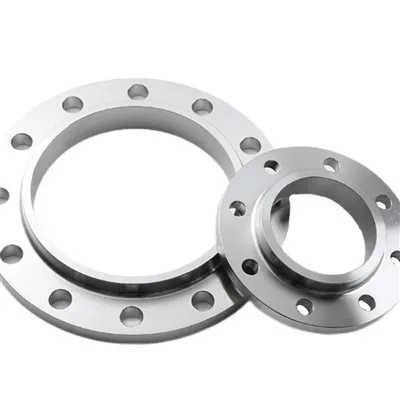
At the end of the day, EN 1092-1 flanges are only as good as their pressure rating spec. The difference between PN and Class isn’t just semantics—it’s the difference between a system that operates safely for 20 years and a shutdown that costs tens of thousands of dollars in downtime and repairs. That’s why we prioritize educating our clients as much as we do supplying flanges. If you’re not sure what rating you need, if you have a mix of PN and Class specs on a project, or if you need help verifying compatibility for a specific application, don’t guess. Reach out to our team to walk through your requirements and make sure you get the right flanges for your system. We don’t just sell parts—we help our clients avoid the mistakes that cost them time and money.
Bs Flange References
ASME B16.5, Pipe Flanges and Fittings, NPS 1/2 Through NPS 24, American Society of Mechanical Engineers
EN 1092-1:2007, Flanges and their joints—Circular flanges for pipes, valves, fittings and accessories, PN designated—Part 1: Steel flanges
Davis, J.R. (Ed.), Carbon Steels: Small Carbon Steels, Stainless Steels, and High Alloys, ASM International, 2005
Shanxi Xinshunda Flange Manufacturing Co., Ltd.
As one of the most professional en1092-1 flange manufacturers and suppliers in China, we also support customized service with competitive price. We warmly welcome you to wholesale high quality en1092-1 flange for sale here from our factory. For quotation, contact us now.
Address: Zhunagli Industrial Zone,jinchang Town,dingxiang,shanxi,china
E-mail: sales01@xinflange.com
WebSite: https://www.xinflange.com/
