Can Lay Flat Hose be used in desert environments? Lay Flat Hose
As a supplier of lay flat hoses, I’ve faced a multitude of questions regarding the versatility and adaptability of our products. One in – particular query that has piqued my interest is whether lay flat hoses can be effectively used in desert environments. In this blog, I aim to delve deep into the intricacies of this topic, offering a comprehensive analysis based on scientific knowledge and practical experience.
Understanding the Desert Environment
Deserts are characterized by extreme conditions. The most glaring aspect is the high temperature. During the day, temperatures can soar to well over 50 degrees Celsius (122 degrees Fahrenheit). Under such intense heat, materials can face rapid degradation. UV radiation in deserts is also extremely strong. The thin atmosphere and clear skies in these regions allow a large amount of ultraviolet rays to penetrate. This can cause significant damage to many common materials, leading to cracking, fading, and a reduction in the overall mechanical strength of the products.
Water scarcity is another defining feature of desert areas. When water is available, it may be in the form of brackish water or contain high levels of sediment and minerals. These factors can pose challenges to any water – carrying equipment, including hoses.
Properties of Lay Flat Hoses
Lay flat hoses are designed to be lightweight, flexible, and easy to transport. They are typically made from a combination of synthetic materials, such as PVC (polyvinyl chloride) or polyurethane, reinforced with high – strength polyester yarns. These materials play a vital role in determining the performance of the hose in different environments.
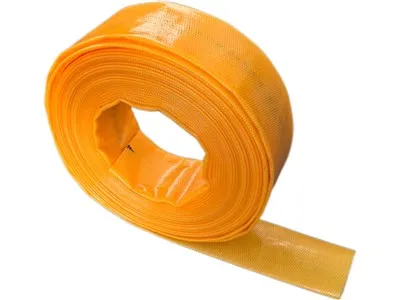
The PVC layer provides an impermeable barrier for water, preventing leakage and ensuring efficient water transfer. The reinforced polyester yarns give the hose its strength, allowing it to withstand pressure. The result is a hose that can be rolled flat when not in use, taking up minimal storage space, and easily deployed when needed.
Advantages of Using Lay Flat Hoses in Desert Environments
High – Temperature Resistance
Many modern lay flat hoses are engineered to withstand high temperatures. The synthetic materials used in their construction have a relatively high melting point and can endure the extreme heat of desert days. For example, high – quality PVC compounds used in some of our lay flat hoses can maintain their integrity at temperatures up to 60 degrees Celsius. This means that even in the searing heat of the desert, the hose can continue to function without significant deformation or loss of its water – carrying capacity.
UV Resistance
To counter the intense UV radiation in deserts, manufacturers have developed special UV – resistant coatings for lay flat hoses. These coatings act as a shield, absorbing and dispersing the harmful UV rays. Our company offers lay flat hoses with advanced UV – protection treatments. These treatments can significantly extend the lifespan of the hose in desert conditions, reducing the risk of cracking and brittleness caused by long – term UV exposure.
Resistance to Abrasion
In desert environments, hoses may come into contact with rough and sandy surfaces. The outer layer of lay flat hoses is often designed to be highly resistant to abrasion. The reinforced structure and tough synthetic materials ensure that the hose can withstand the friction caused by dragging it across the desert sand without quickly wearing out. This durability is crucial for long – term use in such harsh terrains.
Lightweight and Portable
The lightweight nature of lay flat hoses is a huge advantage in desert operations. In areas where transportation can be difficult, the ability to easily carry and deploy the hose is essential. Workers can roll up the hoses and transport them in small vehicles or even by hand. Once at the site, they can quickly unroll and connect the hoses to start water transfer operations, saving time and effort.
Challenges and Solutions
Water Quality
As mentioned earlier, water in desert areas may be brackish or contain high levels of sediment. This can lead to clogging and corrosion of the hose. To address this, we recommend using hoses with smooth inner linings. A smooth surface reduces the likelihood of sediment buildup. Additionally, incorporating filters at the water intake point can help remove large particles before the water enters the hose.
Cold – Night Effects
Desert nights can be extremely cold, with temperatures dropping well below freezing in some regions. The rapid temperature change from day to night can cause stress on the hose materials. To mitigate this, some lay flat hoses are designed with materials that can withstand a wide temperature range. Our hoses are engineered to remain flexible even at low temperatures, preventing cracking due to thermal contraction.
Real – World Applications in Desert Environments
Lay flat hoses have found numerous applications in desert regions. In agriculture, they are used for irrigation. By transferring water from wells or small water sources to fields, they help farmers grow crops in arid areas. In construction projects in deserts, lay flat hoses are used for dust suppression. They can quickly and efficiently distribute water to large areas, reducing dust pollution and creating a safer working environment.
In mining operations, which are common in some desert regions, lay flat hoses are used to transport water for various processes, such as ore washing. Their ability to withstand high pressures and the harsh conditions makes them an ideal choice for such industrial applications.
Conclusion
In conclusion, lay flat hoses can indeed be used effectively in desert environments. Their high – temperature resistance, UV protection, abrasion resistance, and portability make them well – suited for the challenges posed by deserts. While there are challenges such as water quality and extreme temperature variations, these can be addressed through proper design, selection of materials, and the use of additional equipment such as filters.
High Pressure Hose If you are involved in projects in desert areas or any challenging environments and are looking for a reliable water – transfer solution, I encourage you to consider our lay flat hoses. Our products are designed to meet the highest standards of quality and performance. We have years of experience in supplying hoses to various industries, and we are confident that our lay flat hoses can meet your specific needs. Contact us to start a discussion about your requirements and how we can assist you with your procurement.
References
- Handbook of Polymer Science and Engineering, Second Edition.
- Textile Materials for Technical Applications, edited by Zahide Ozkan and Ekrem Arslan.
Weifang Xinzhiyuan Plastic Co., Ltd.
As one of the most experienced lay flat hose manufacturers and suppliers in China, we offer a wide range of products with superior quality. Please feel free to wholesale premium lay flat hose made in China here from our factory. We also accept customized orders.
Address: No. 700, Tongle Street, Economic Development Zone, Changle County, Weifang City, Shandong Province
E-mail: hua@xzypvchose.com
WebSite: https://www.pvchose-xzy.com/
